A product-first workflow helps ecommerce teams generate more campaign variations without weakening accuracy, trust, or the customer experience.
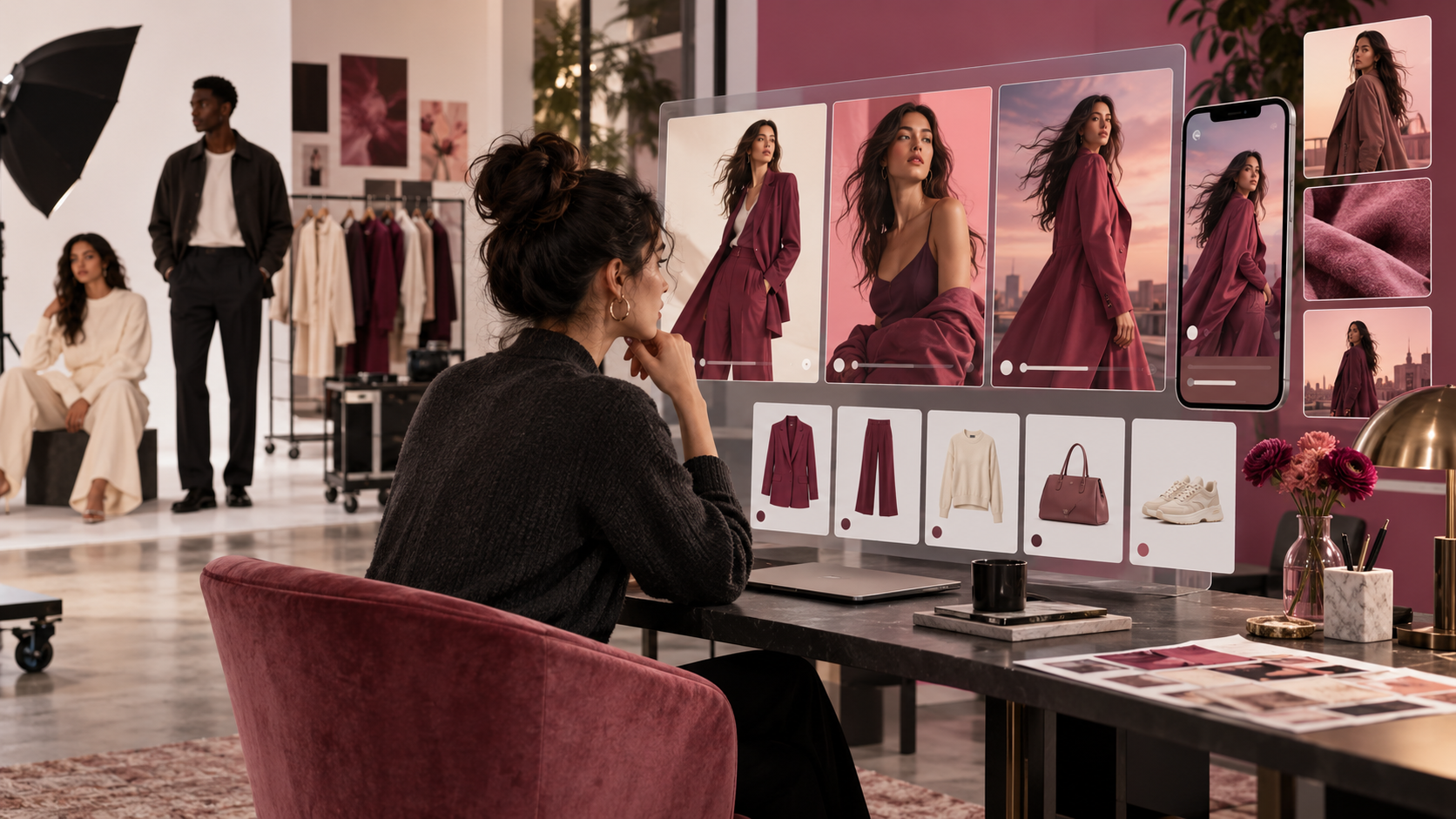
DTC fashion brands face a creative volume problem. A single product may need clean catalog images, lifestyle scenes, launch ads, email banners, marketplace assets, and a steady stream of vertical video. Traditional production can deliver beautiful work, but recreating every format, location, and audience variation quickly becomes expensive and slow.
Generative AI can expand the number of concepts a team explores, yet speed alone is not the goal. In ecommerce, the visual is part of the product promise. If color, fit, construction, or context is misleading, the brand may win a click and lose trust after delivery. The right workflow therefore starts with product truth and uses AI to scale controlled variation around it.
Why creative scale has become a customer experience issue
Shoppers encounter the same product across social ads, product pages, email, messaging campaigns, and customer support conversations. Inconsistent visuals create uncertainty. A customer may ask whether two images show the same color, whether the garment fits differently, or whether an advertised detail is included. Those questions increase support volume and can contribute to returns.
A coordinated visual system helps marketing and customer support tell the same story. Approved product attributes, model guidelines, disclosure rules, and campaign references should be accessible to both teams. When creative production changes, the customer-facing knowledge base should change with it.
Use a product-first AI workflow
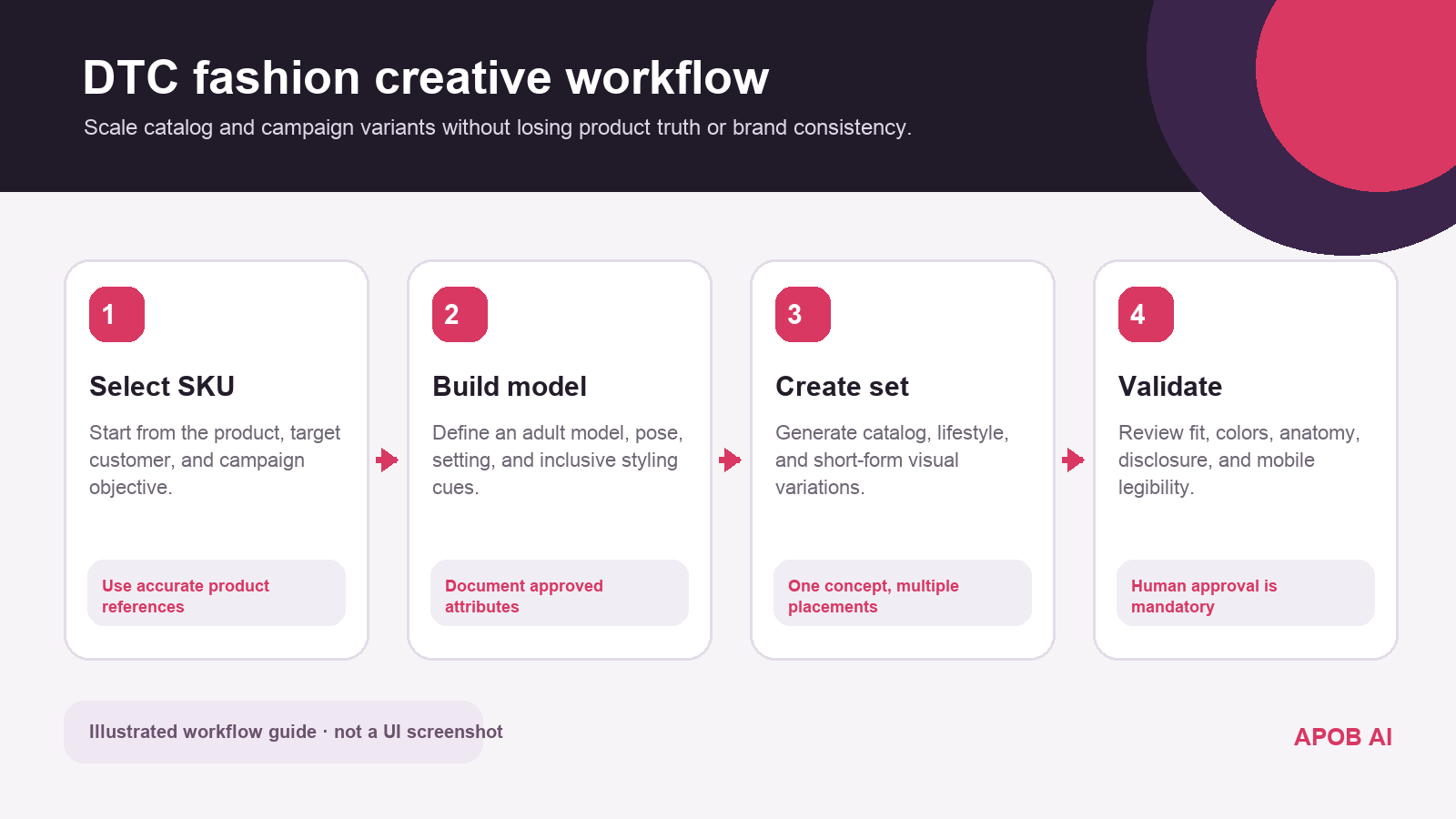
Figure 1. A product-first DTC fashion creative workflow; this is an illustrated process guide, not a product UI screenshot.
1. Start with an accurate SKU brief
The brief should record the product name, color, material, silhouette, key construction details, size range, target customer, allowed claims, and known limitations. Reference images should be well lit and show the features that must remain unchanged. If a detail is not visible or verified, the generation prompt should not invent it.
Teams should also define the campaign objective before selecting a style. A product-page image needs clarity and accuracy. A social ad may prioritize an emotional scenario. A support illustration may need to explain fit or use. These assets can share a visual identity while serving different jobs.
2. Define the model and styling system
Synthetic adult models can help brands explore a broader range of looks and placements. The key is to document approved traits rather than improvising them for every asset. Record the model’s adult age range, general build, pose direction, hair, styling, expression, and the cultural or market context the campaign is intended to serve.
For intimate-apparel concepts, an AI lingerie model generator can be used to prototype tasteful adult fashion imagery while the team applies strict brand-safety rules. Avoid sexualized poses that conflict with the audience or channel, use only adult fictional or consented subjects, and treat the generated result as a creative draft that still requires review.
3. Build a reusable creative set
Once a product and model direction are approved, create a small visual set: a clean catalog frame, a close detail, a lifestyle scene, and a vertical campaign composition. These assets should share product colors, styling, lighting logic, and model identity. The set becomes a source library for future placements rather than a collection of disconnected images.
Variation should be intentional. Change one or two dimensions at a time, such as background and camera distance, while keeping the product fixed. That makes it easier to compare performance and identify what drove the result.
4. Extend the campaign into short-form video
Short-form video can reuse the same approved visual system. A brand might animate a lifestyle frame, move between product details, or test alternative presenters for different markets. An AI character swap video generator can support fictional-character variations, but it should never be used to impersonate a real person or replace someone’s identity without permission.
Keep the first video test simple: one hook, one product benefit, one proof point, and one call to action. Complex scenes increase the chance of visual drift. Shorter, modular clips are also easier to reuse in paid social, email, product pages, and conversational commerce.
Create a review checklist that protects product truth
Every generated asset should pass a human review before publication. The reviewer should compare it directly with the SKU reference and verify:
- Color and material: are hue, texture, transparency, and finish represented accurately?
- Construction: are straps, seams, closures, pockets, and proportions correct?
- Fit: does the image avoid promising a fit outcome the product cannot guarantee?
- Anatomy and motion: are hands, limbs, fabric behavior, and transitions natural?
- Rights and identity: are subjects fictional, licensed, or used with documented consent?
- Disclosure: does the brand need to label the asset as AI-generated or AI-assisted for the channel or jurisdiction?
A failed check should route the asset back to the exact stage that introduced the issue. Regenerating the entire campaign wastes time and may create new inconsistencies.
Connect creative performance with CX data
Click-through rate and conversion rate show whether a creative attracts and persuades. Customer experience data shows whether the promise was understood. An AI-powered ecommerce support system can help brands identify repeated questions about colour, fit, availability, and other product details across customer conversations. Track return reasons, pre-purchase questions, support contacts related to color or fit, negative comments, and repeated chatbot intents after a campaign launches.
If one creative produces stronger clicks but more “Is this the exact color?” messages, the visual may be attractive but ambiguous. If a model variation improves conversion for a market while return rates remain stable, the brand has stronger evidence that the variation is useful. Combining marketing and support signals produces a more honest view of creative quality.
Start small, then operationalize what works
A practical pilot uses one SKU, one audience, and one channel. Produce a controlled set of variations, document the prompts and approvals, and compare the results with the existing creative. Only after the workflow proves accurate should it expand across more products and markets.