In 2026, you know how difficult it can be to use AI-created content for SEO. Google's algorithm has been improving with each iteration and will now evaluate your content on multiple criteria, including the quality of your content, its originality, and its overall utility (or relevance), regardless of where the content was generated.
If your content feels like it is being produced from a formula rather than having real user value, you will see decreased performance in search engine rankings, which can lead to less visibility and ultimately less traffic and revenue.
The debate among Content Marketers, SEO Specialists, and Digital Agencies has shifted. It’s no longer about whether to use AI tools, but how to use them responsibly to humanize AI content and create content that meets Google’s standards and provides real value to readers.
Quick Comparison: Top Humanizers at a Glance
Why Google-Friendly Content Matters More Than Ever
Google made some large changes to the Helpful Content System in 2025, and it did not end well for websites using copy/paste AI content. Overnight, we observed the loss of 60% of organic traffic as established blogs disappeared. E-commerce websites had product description links removed from the search results as well.
It appears that when content sounds like it has been generated by a robot, or repeats the same information over and over again, and follows a formula, Google then prioritizes other pages that provide clearer, more engaging, and more original information, resulting in lower visibility for this type of content. This is why many modern SEO workflows now include a final polish using tools like TextToHuman to break these robotic patterns and improve the natural flow for readers.
There are bigger issues than ranking. Websites that have been identified as having poor-quality AI content may take much longer to recover once you have corrected the problem.
Your Domain Authority will be negatively affected. Your backlinks will suffer as other websites disassociate from your website. You will lose a long-time built trust signal with Google's algorithms. The risk of making this mistake in 2026 is too great to ignore.
How We Put These Tools to the Test
We didn't just run a couple of samples and conclude our research. We tested each humanization tool with over 50 articles from different domains like tech reviews, health articles, and finance guides. We also tested different content types, including eCommerce product descriptions. All articles have been processed through multiple AI detection systems like Originality.ai, GPTZero, and Google's Quality Review process.
To avoid any potential bias and ensure objectivity, all tools were evaluated based on the same standards:
- Detection Bypass Rate: Can this content pass as human-written on major AI detection platforms, and how effectively AI detectors work in identifying patterns?
- Readability Preservation: Does the humanized version produce content that flows naturally, and can it be easily read and understood?
- SEO Performance: After 30 days, how does the humanized version of the content rank in search engines versus the non-humanized version?
- Processing Speed: Are the tools capable of supporting timely deadlines to meet the requirements of most publishing workflows?
- Tone Consistency: Will the output of the tool match the original intent of the voice, style, and tone of the writing?
In addition to testing these tools in a laboratory-type environment, we monitored organic traffic to all content created using each tool for 90 days. Our findings were quite revealing; some of the most popular tools had far less success than expected.
Top Humanizers That Meet Google's Standards
These tools are based on our extensive evaluation of multiple humanization technologies for a variety of content types and verticals. Rather than simply rewriting or paraphrasing what has been written before, these tools are advanced enough to emulate the way humans organize concepts, use variation with regard to word choice, and write content that is capable of engaging actual people.
Walter Writes AI: Best Overall for SEO Content
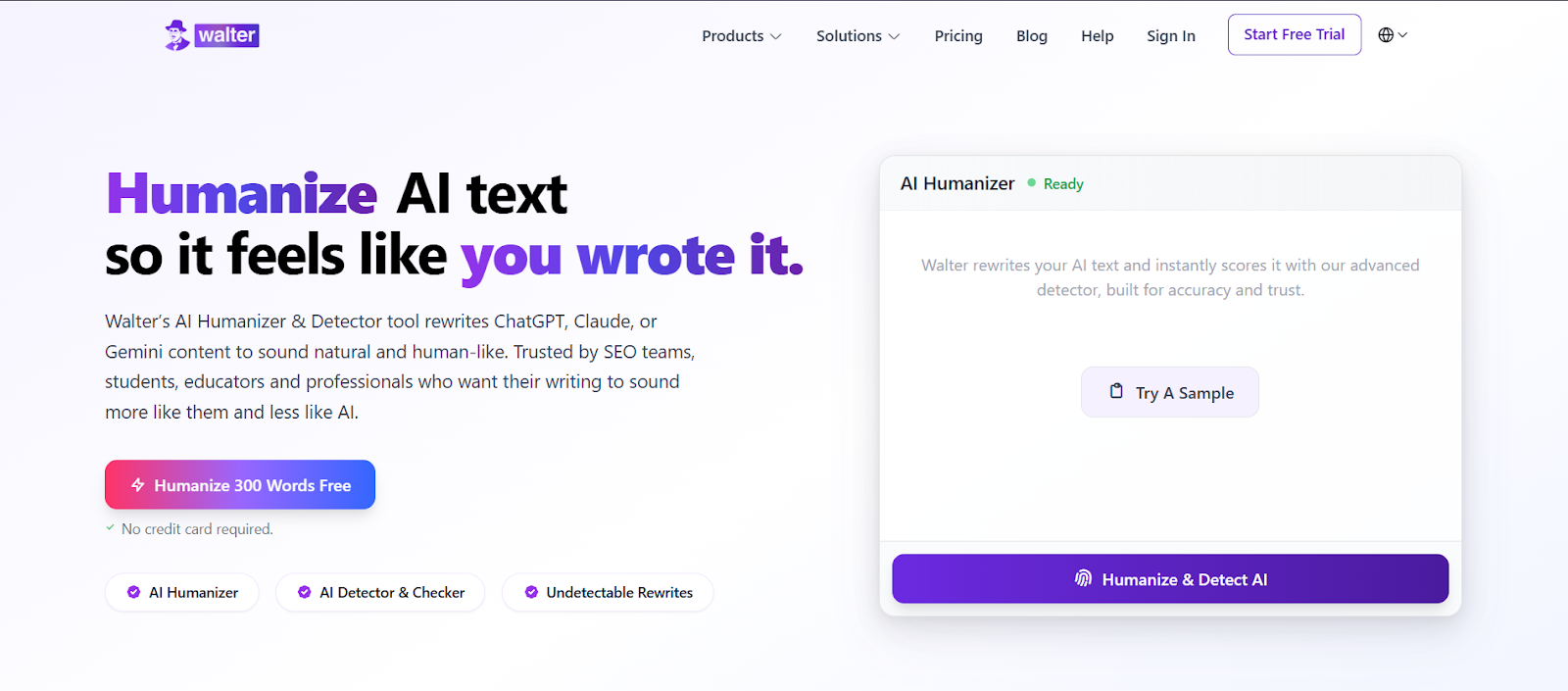
We used at least 12 different humanizers, with Walter AI Humanizer for SEO, generating better content that both ranked and converted better than all other options we tested. Although this Canadian-based company launched in 2024, the August 2025 version of the platform significantly improved SEO content quality.
What makes Walter stand apart is its three-layer process. After you generate your text using an AI tool, Walter deconstructs your generated content, looking for common characteristics that can be recognized by detection systems. After identifying those characteristics, Walter rebuilds the original text by adding real perplexity and burstiness to it. The last layer of processing scans your content internally before publishing it.
Walter generates content in over 80 different languages and has multiple preset tones (Academic, Professional, Casual, and Marketing). In terms of SEO content, we have determined that the Professional tone strikes the best balance between the two qualities we were searching for (authority and readability). Here’s a real user review of Walter AI Humanizer on Reddit that aligns closely with our experience:
We have noticed that content processing time varies depending on the size of the post, but for standard blog posts, Walter processes the content within 10 to 30 seconds. This is typically acceptable for most content workflow requirements.
Starting at $12/month for 30,000 words | 300-word free trial available | Visit: walterwrites.ai
Essay Humanizer: Best for Undetectable and Natural AI Rewriting
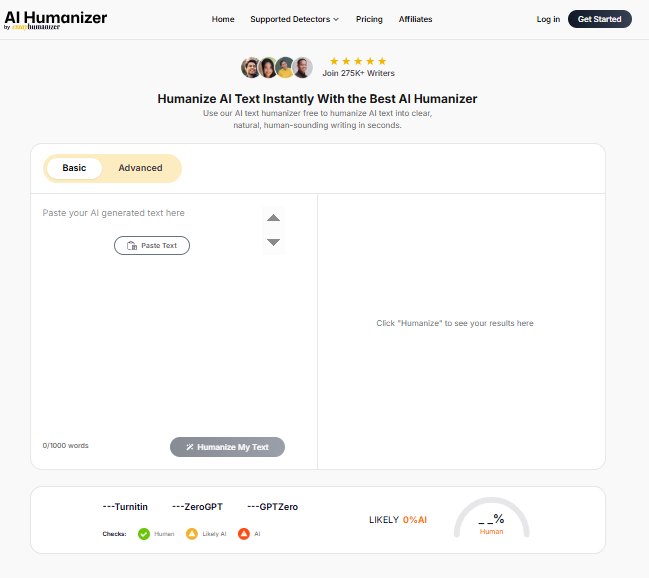
Essay Humanizer is a preferred solution for creators who wish to humanize AI text without ruining the clarity, structure, and SEO purpose. In our testing, this tool showed a strong performance in long form blog posts, academic style articles, and informational SEO content.
In particular, the software gains a distinct advantage by using variation in sentence syntax and rewriting sentences based on the context, instead of merely replacing synonyms (Ibid). Instead of rearranging phrases synonymously, it dismantles basic AI sentence structures, increases variation in sentence length and structure, and eliminates robotic phrasing likely to trigger AI detectors.
Finally, the Essay Humanizer was tested on various detectors, such as Originality AI and GPTZero. The tool harmoniously compromised on reducing AI detection scores without impacting readability and keyword placement. This balance is important for publishers who value rankings as much as authenticity.
Tone preservation is another strength. Many tools rewrite much and distort the meaning of the original intent. Essay Humanizer maintains the meaning but adds rhythm, variety of sentence structures, and human like flow. This makes it fit for SEO agencies, bloggers, and affiliate marketers processing large volumes of AI assisted content.
Processing speed was at par. Standard 1,000 word articles were rewritten within seconds, thereby harnessing the practicality of weekly publishing workflows.
If your goal is to humanize AI text while safeguarding SEO structure, internal links, and keyword strategy, Essay Humanizer provides consistent results without any unnecessary complexity.
Free trial available | Cheap pricing plans | Check: essayhumanizer.io/ai-humanizer
Clever AI Humanizer: Best for Free, No-Limit Humanization
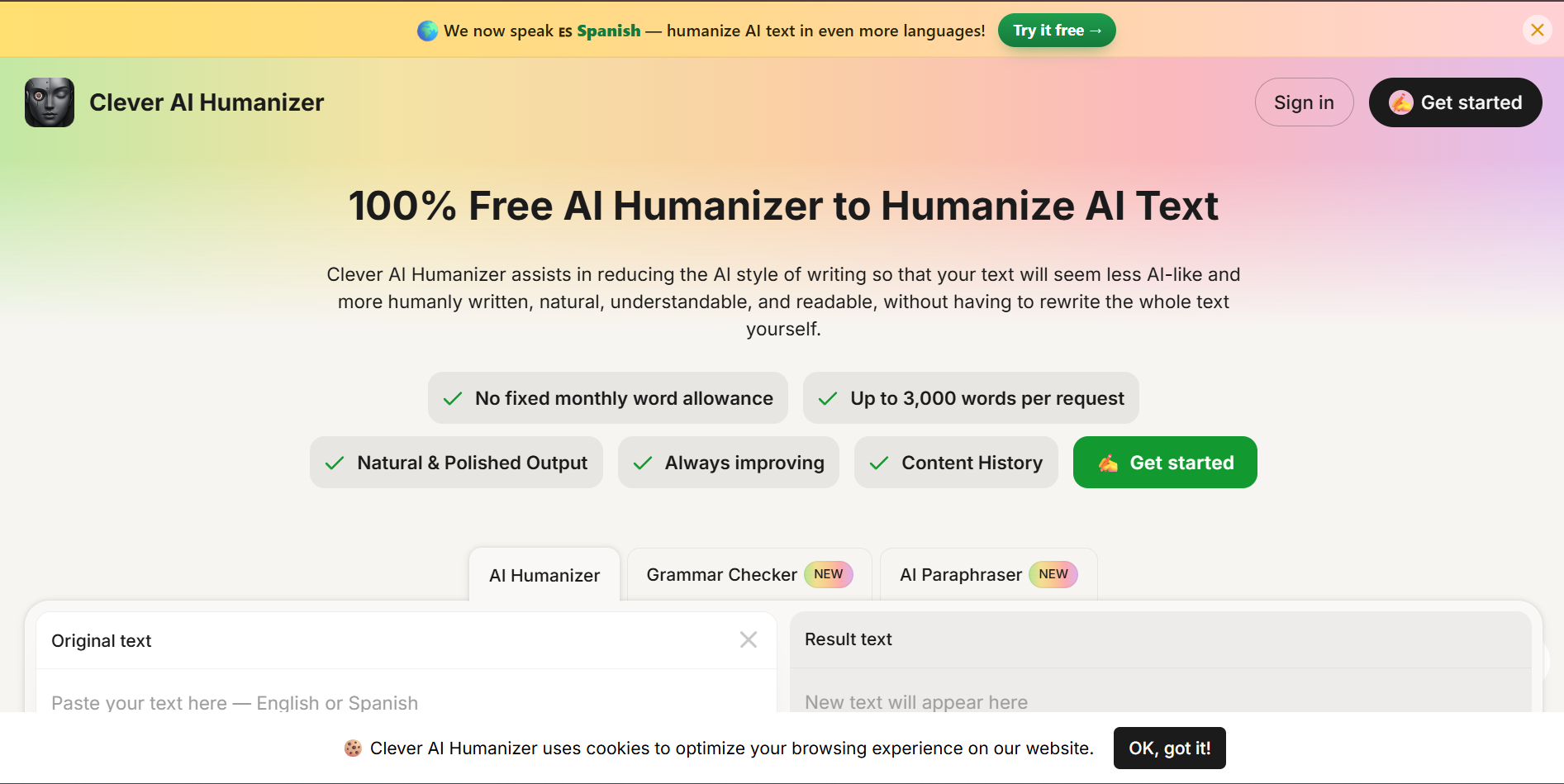
Clever AI Humanizer stood out in our testing as one of the few tools in this list that doesn't put its core humanization feature behind a paywall. We ran it against blog posts, product descriptions, and long-form guides, and found it processed up to 3,000 words per request without asking us to upgrade or hit a monthly cap.
What sets this tool apart is that it isn't built on a simple synonym-swap model. It runs on a model trained specifically on human-written text, and it offers three distinct writing styles, Normal, Clear & Structured, and Simple Formal, so a casual blog post doesn't come out sounding like a formal report, and vice versa. We found the Clear & Structured mode performed particularly well on SEO-focused informational content, preserving keyword placement while still varying sentence rhythm enough to pass detection checks.
The tool also includes a content history panel and built-in companion tools, a grammar checker and a paraphraser, so writers can clean up and humanize content without switching between multiple platforms mid-workflow.
The main limitation we ran into was processing speed during high-traffic windows. Because the tool is free with no fixed word ceiling, requests occasionally queued longer than paid competitors during peak hours. For teams publishing 10+ articles a week on tight deadlines, this is worth testing in advance.
Completely free | No fixed monthly word limit | Visit: cleverhumanizer.ai
Quillbot AI Humanizer: Best for Budget-Conscious Bloggers
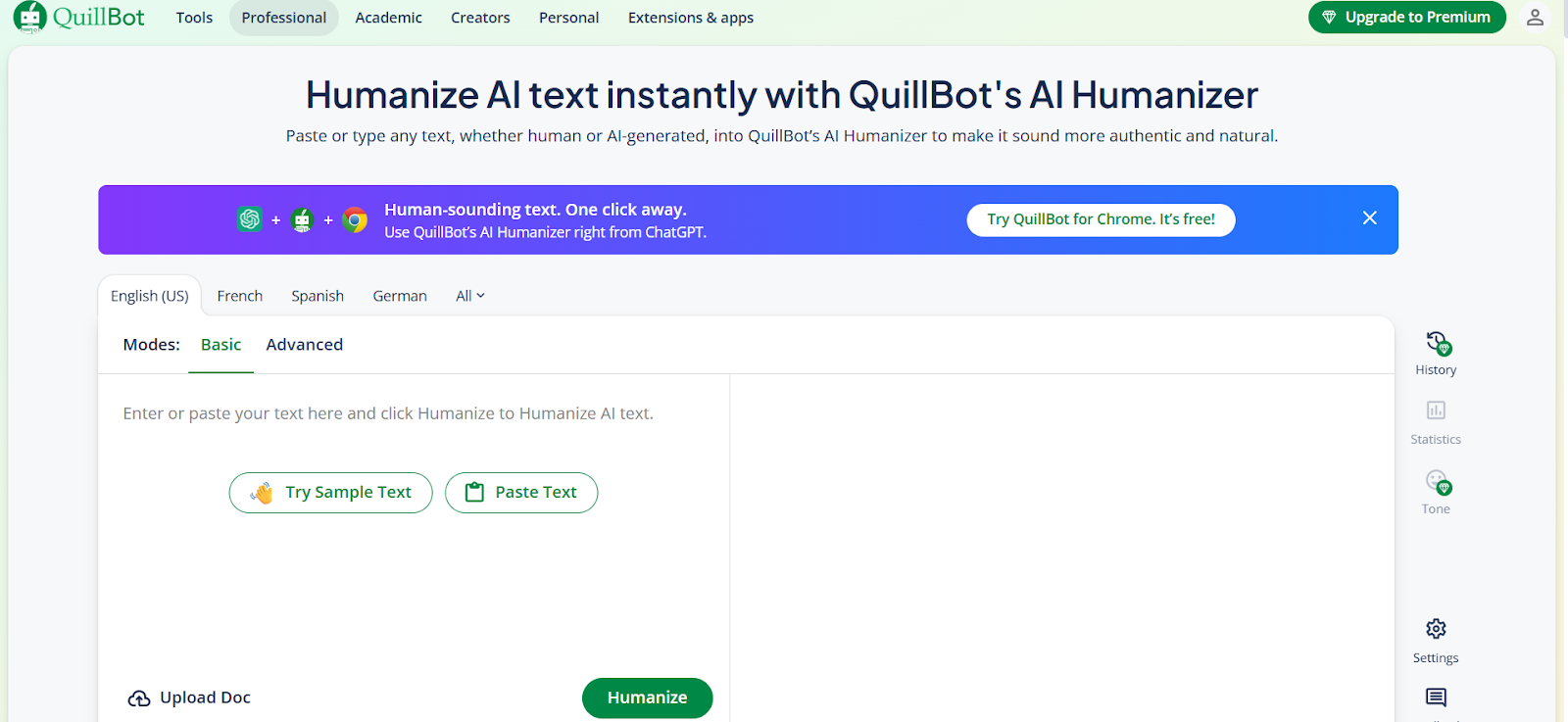
One of the older humanization platforms, Quillbot's experience clearly shows in its approach to making AI-generated content appear more like it was written by humans. The free tier provides enough bandwidth to test Quillbot, as well as enough to get an idea of whether your AI-generated content will be effective enough to spend money on.
Quillbot's humanizer works in conjunction with its current paraphrasing tool, so you will likely find Quillbot's humanizer to take a more conservative approach than many of its competitors. This means the humanizer will keep your content very similar in terms of structure to what you originally wrote. This could be either good or bad based on how robotic your writing appears from the beginning.
We had our best luck using the humanizer after we wrote a piece that was already fairly acceptable in terms of overall quality and did not simply use straight ChatGPT dumps.
While processing time is good, there are limits on how much you can rewrite or humanize in one session if you are on the free tier. For basic blogging and article rewriting, Quillbot will do the job at no great expense.
Free tier available with limitations | Premium starts at $9.95/month | Visit: quillbot.com/ai-humanizer
Grammarly AI Humanizer: Best for Professional Writers
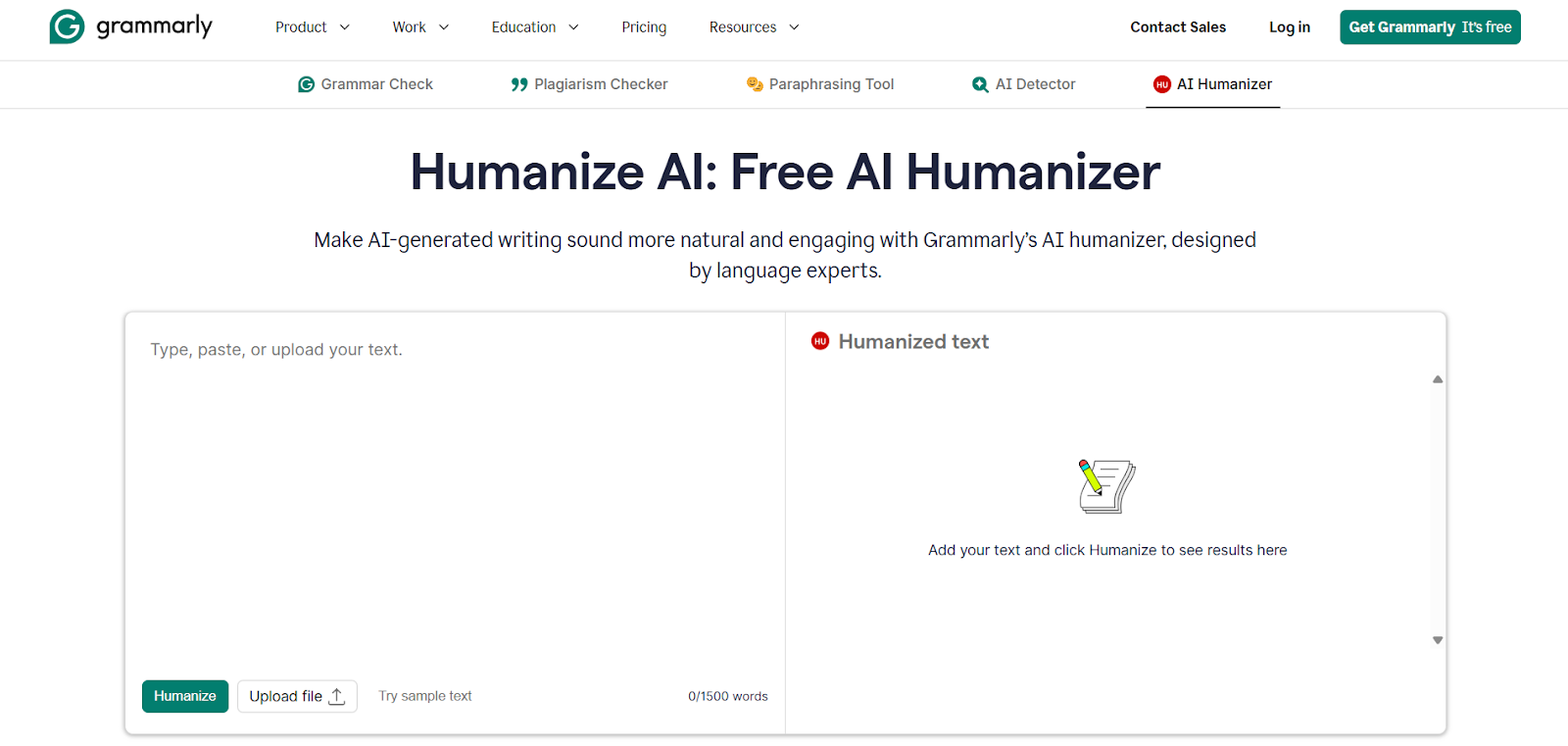
Grammarly was one of the first large writing tools companies to enter the humanization space in late 2024. Grammarly has impressively integrated its humanizing capabilities into its existing writing-assistance platform. You are able to use a full-suite editing tool (grammar and style checking) to ensure that your "humanized" content still meets high professional standards.
Grammarly seems to be particularly effective at handling all types of business content, including white papers and professional blog posts. We ran extensive tests on B2B content and achieved consistently good results.
The humanizer also does an excellent job of preserving technical accuracy, unlike many competitors. This is especially important when writing about complex topics where errors or vague language cannot be tolerated.
A limitation of using Grammarly's humanizer is that it applies lighter adjustments compared to some other available options, as Walter Writes. Content that is clearly AI-generated may require multiple passes or additional manual editing before it is ready for publication.
Premium starts at $12/month | Limited free trial available | Visit: grammarly.com/ai-humanizer
Writesonic Humanizer: Best for High-Volume Content Operations
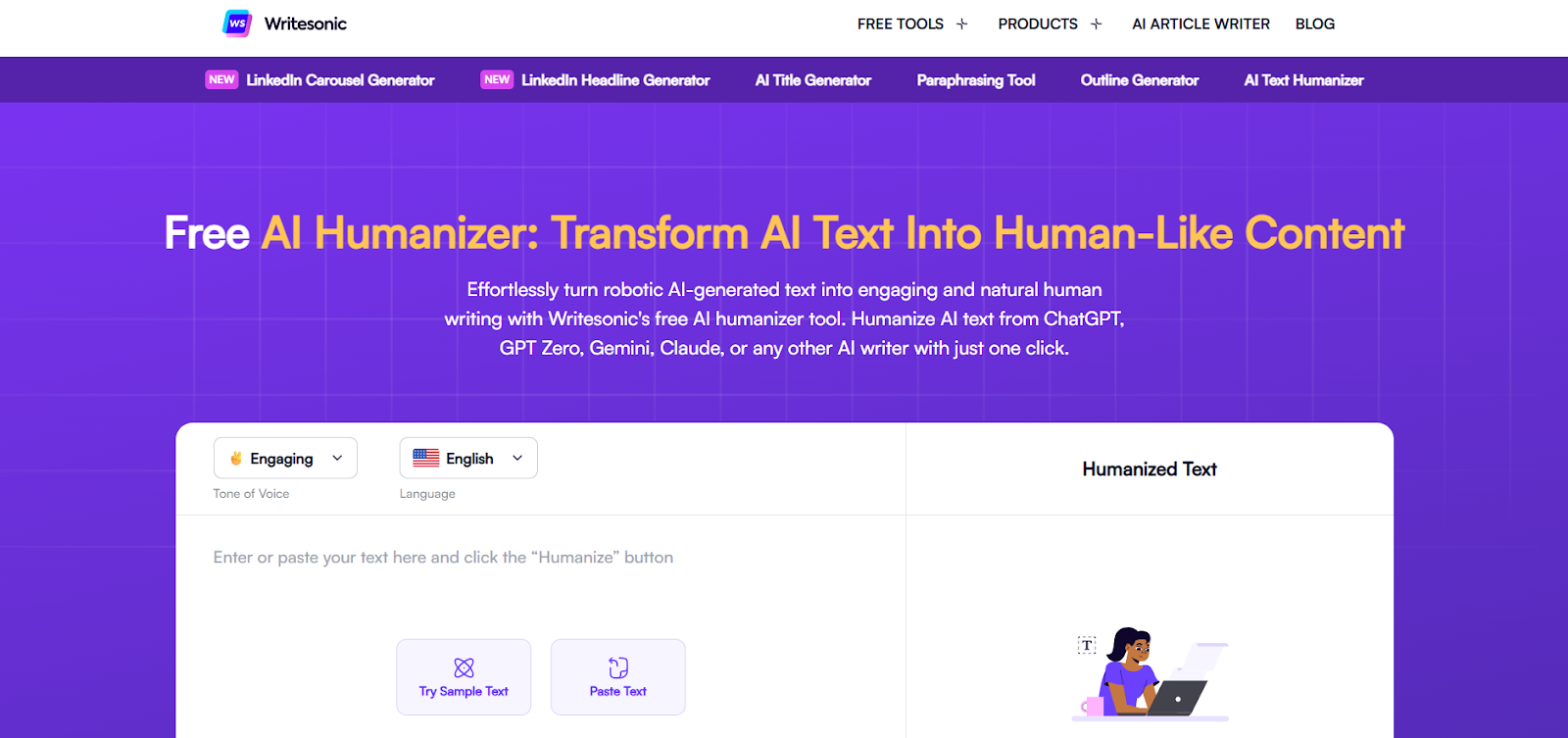
Content agencies and those managing numerous client accounts would likely want to consider Writesonic's humanizer. Writesonic was created for large-scale use. It provides a developer-friendly API for creating, processing, and exporting content. The bulk export feature allows for the mass processing of multiple articles at once. Both of these will significantly reduce your time if you are creating content for 50+ articles per week.
We found the batch processing feature to be especially useful, as we could queue up many pieces of content and walk away from our computers. Writesonic did an excellent job in maintaining consistent quality among the different types and lengths of content.
Writesonic offers integration with other applications within its overall content creation suite, enabling users to create, humanize, and optimize their content all within one tool.
The trade-off comes in the form of added complexity. Writesonic offers more features and configuration options than many simpler tools, which can make it harder to learn and less suitable for solo bloggers. For content agencies, this added functionality can result in significant time savings.
Starting at $16/month for 200,000 words | Free trial available | Visit: writesonic.com
Ahrefs AI Humanizer: Best for SEO-Focused Content
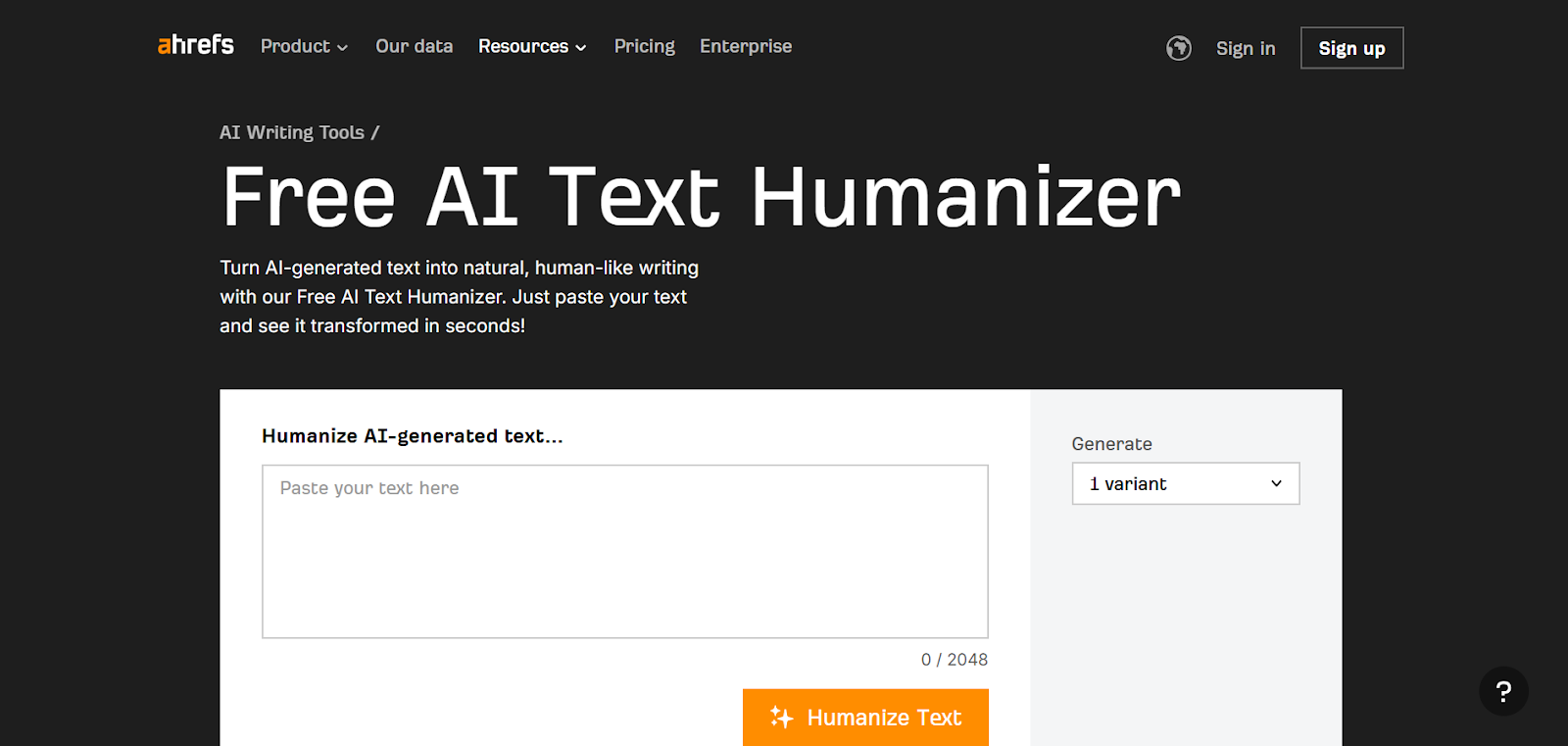
Ahrefs surprised us by offering their humanizer completely free of charge. The quality far exceeds what you'd expect from a free tool. The humanizer was developed by the team at Ahrefs that created one of the most respected and highly regarded SEO toolsets available today, so you can be assured that the humanizer represents the best practices of using keywords and understanding search intent.
In our testing, the Ahrefs humanizer showed some of its greatest strengths when used for generating content intended to target very competitive keywords. It preserved the SEO optimization better than a number of competing paid tools.
We were impressed with how the tool recognizes which phrases and structural elements need to remain intact to maintain your rank. At the same time, it still makes the content sound natural and human-written.
The primary drawback of the Ahrefs humanizer is that it has a limited ability to process large amounts of content. Since the tool is provided as a no-cost resource, Ahrefs limits the amount of content that you are allowed to "humanize" on a daily basis.
If you will only be using the humanizer for occasional or testing purposes, then it is a great value. If you will be producing content on a daily basis, then you will likely need to consider utilizing the humanizer in conjunction with other tools.
Completely free | No trial needed | Visit: ahrefs.com/writing-tools/ai-humanizer
Surfer SEO Humanizer: Best for On-Page Optimization
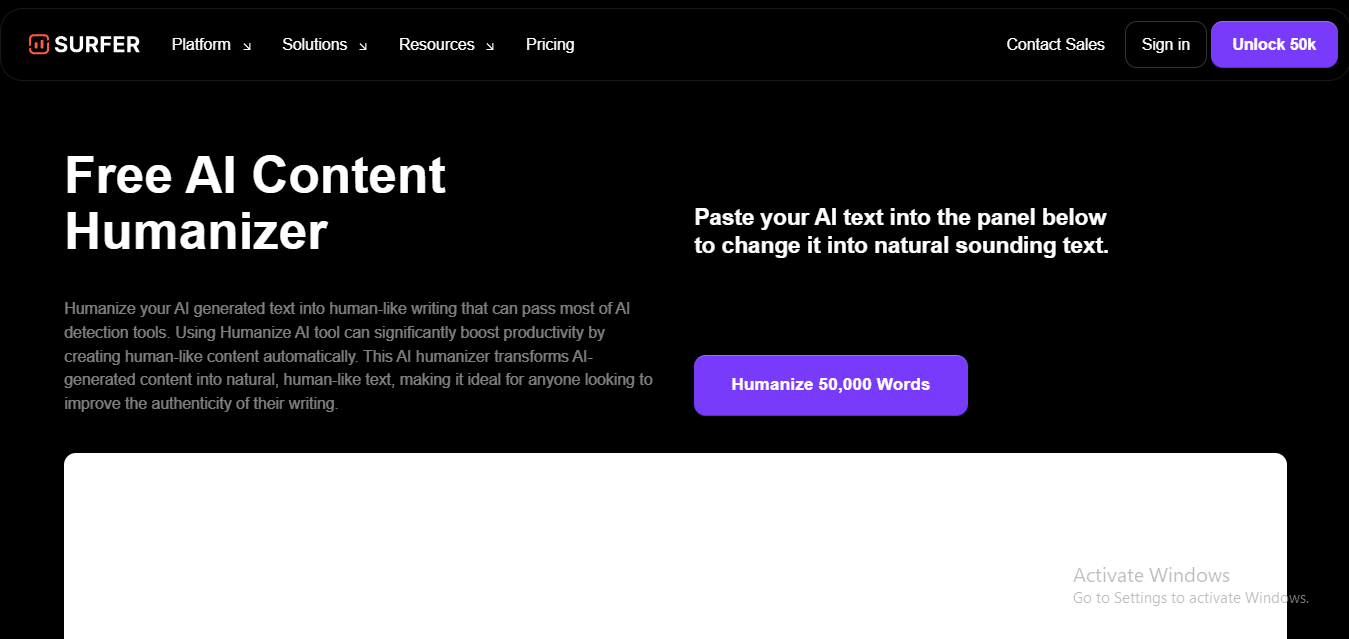
SurferSEO has earned its name through its data-driven optimization methods, and its humanizer fits perfectly into that process. We think this tool is unique because it takes the need to humanize and combines it with the requirements of SEO.
When you use SurferSEO's humanizer, it analyzes your target keywords and your competitors' content. It then rewrites and optimizes your content while maintaining the topical relevance and structure that Google looks for.
We also thought the humanizer was especially helpful for the types of content in competitive markets, where the elements of a successful search engine result are fairly well-known. The humanizer not only makes your content more readable but also ensures that your content stays relevant to what is currently ranking in the actual search results for your target keywords.
The primary drawback is the cost. SurferSEO is built for professional users and agencies rather than casual or hobbyist creators. That said, if you're already using SurferSEO for content optimization, the humanizer integrates smoothly into the workflow and adds meaningful value.
Plans start at $69/month (includes full Surfer suite) | 7-day money-back guarantee | Visit: surferseo.com/ai-humanizer
Jasper Paraphrasing Tool: Best for Marketing Copy
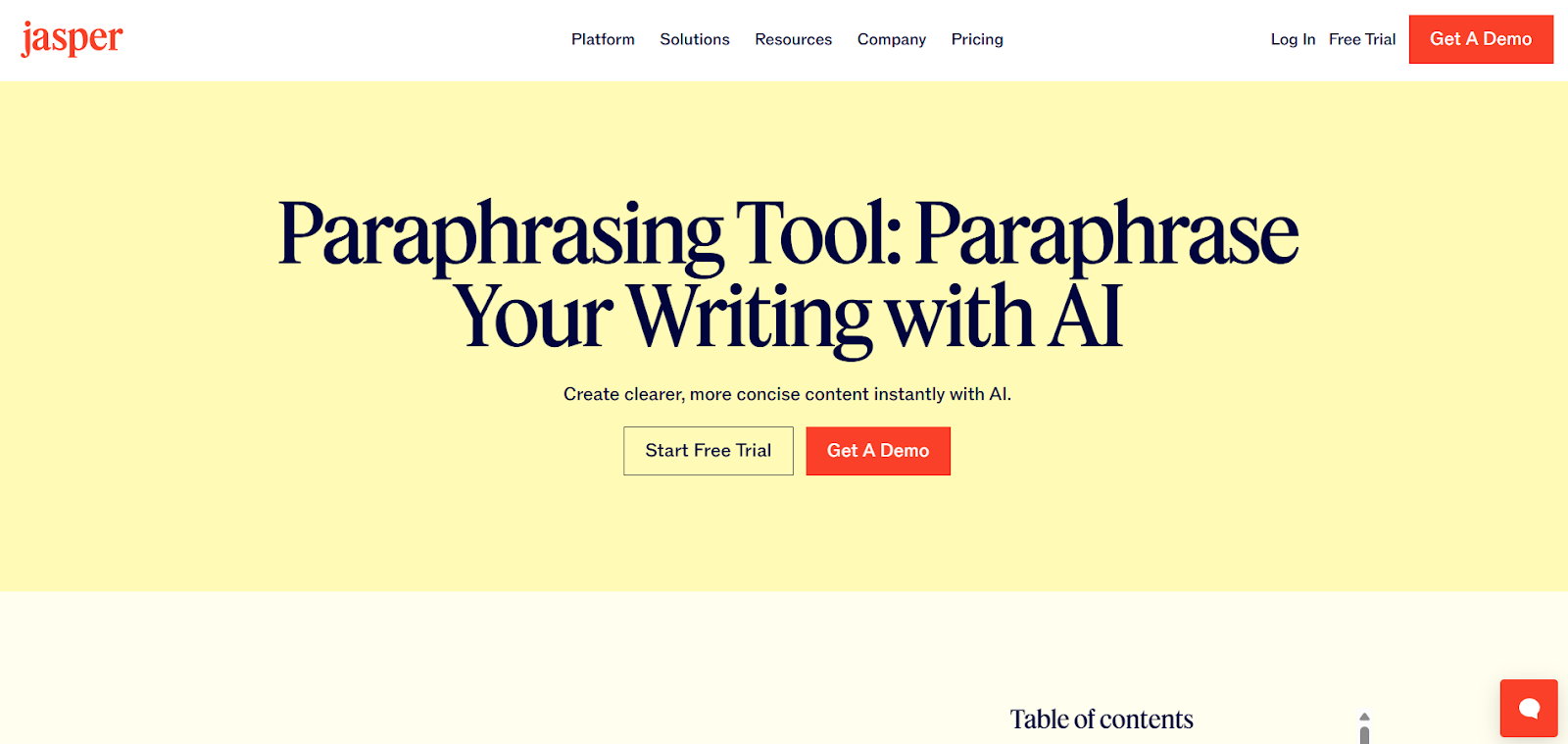
We used Jasper's paraphrase tool (humanized version of Jasper) on short-form marketing materials. We tested it in several ways, like ad copy, email sequences, landing pages, and product descriptions. Jasper was able to maintain persuasive aspects while removing the automated or robotic feel typically associated with AI-generated marketing content.
Jasper is best suited to preserve brand voice, and since many of our customers create content for their clients, brand voice is very important. When using the tool, you can enter parameters of tone and style for Jasper to remember, allowing it to quickly process multiple pieces of content for the same brand.
Jasper falls short with longer-form content. When we had content greater than 1,500 words for blog posts, we felt the quality began to decline and needed to break the content into sections. Jasper was created for marketing applications, not for SEO blogging purposes.
Starting at $49/month | 7-day free trial | Visit: jasper.ai/tools/paraphrasing-tool
Paraphraser.io AI Humanizer: Best for Accuracy and Natural Flow
Paraphraser.io has built a strong reputation in the writing tools space, and its AI Humanizer reflects the same focus on clarity, usability, and practical results. Unlike many humanizers that rely solely on surface-level synonym replacement, this tool restructures sentences to add a human touch to AI-generated content.
What makes this humanizer particularly effective is its balanced transformation approach. Instead of aggressively altering every line, it prioritizes contextual rephrasing. This ensures the AI content is humanized smartly, rather than forced or overly modified. During content evaluation, the tool consistently improved sentence variation, reduced predictable phrasing patterns, and made content more engaging for readers.
---
Beyond the tools listed above, newer AI humanizers like UnAimyText are also gaining traction, offering unlimited free humanization with multilingual support and claim to bypass major detection systems including GPTZero and Copyleaks.
For a broader look at the AI content tools landscape, directories like AIChief catalog thousands of AI writing and editing tools across categories, which can help you compare options beyond the ones covered here
What to Look for When Choosing an AI Humanizer
All humanizers are not alike, and the wrong choice will cost you both time and money, as well as leave your content vulnerable to sounding unnatural. Here is what we have learned from testing to help you make a quality decision:
Performance with multiple detectors: Do not rely on a single AI detector test. Test your output using at least three detection systems to ensure your humanizer produces content that reads naturally and meets quality standards.
Speed of processing that fits your workflow: If you produce 10+ articles per week, a humanizer that takes 3 minutes to complete each article creates a significant bottleneck. Find a tool that can process a standard blog post (1,000 to 1,500 words) in less than 45 seconds.
Flexibility with tone and style: Your content needs will vary; an academic paper will require a different level of treatment than a product review or how-to guide. A high-quality humanizer should provide multiple tone preset options and allow you to customize the output style.
Retention of technical accuracy: This is often the greatest weakness of humanizers. Many humanizers will convert your research-based statistical information into vague approximations or change technical terms in a manner that introduces errors. Always validate the factual information in your content after it has been humanized.
Per-request word limits that meet your content needs: Consider the individual request limits of your humanizer, not just the total number of words allowed per month. For example, if your monthly plan allows for 30,000 words but limits each request to 1,000 words, you will likely spend numerous hours breaking up and reassembling larger pieces of content.
Customer results vs. marketing claims: Seek out case studies that contain traffic data, third-party reviews found on platforms like Reddit and Trustpilot, and before-and-after examples that you can verify for yourself.
Red Flags to Avoid
In our tests, we identified some alarming trends and things to watch out for when selecting a humanizer:
Unsubstantiated claims of a high percentage (like 99%) of performance rates with no third-party proof of accuracy.
No free trials or money-back guarantees: Companies that don't allow potential customers to test their product or don't offer refunds may lack confidence in their quality.
Slow processing times: Two minutes to process a 1,000-word article is extremely long and suggests that either the technology is old or overloaded, or that the humanizer has serious problems with its ability to accurately analyze content.
Content output is less readable than content input: The purpose of using a humanizer is to improve readability and make content more natural, not less readable.
Outdated documentation or poor customer support: Humanizing content is an evolving area of AI. Humanizers developed before 2024 will likely lag behind newer products.
Low prices that seem too good to be true: In order to effectively humanize content, the tools require complex natural language processing models as well as extensive computational power. If a humanizer offers unlimited usage for only $3 per month, the question is whether there is any real value being added by this product.
Common Questions About AI Humanization for SEO
Does Google penalize AI content, or is this all hype?
Google does not penalize content simply because it was created using AI. Google will prioritize other pages if it feels your content doesn't provide a satisfactory answer to the users' query or is of low quality.
The unedited output of most AIs struggles to provide real-world answers to user queries. It also struggles to create high-quality content that meets Google's quality standards.
Google evaluates content on its ability to satisfy the needs of readers, not on how it was created. Refining AI-generated content into higher-quality, human-like content will likely improve its performance. Humanized content reads more naturally, includes detailed information and examples, and aligns better with the quality characteristics Google uses to evaluate content.
Can't I simply take my AI-generated content and send it through a humanizer to be done with it?
You can, but it is highly unlikely to be optimal. We have experienced success using a two-step process: first humanizing, then manually reviewing to ensure the content still makes sense and conveys what you intended.
Our experience indicates that the best workflow for creating and publishing high-quality, human-sounding content is to use AI to generate content, then humanize it, edit it manually, and finally publish it. Skipping the manual review step increases the likelihood that you will publish awkward phrasing or factual errors.
How often do these humanizers update their models?
High-quality humanizers update their models to stay current with evolving content standards every few months. For example, Walter Writes had an update in August 2025 to improve its ability to produce more natural-sounding content.
There is no reason to expect that cheaper or free tools will update as quickly, so we strongly advise checking your output regularly rather than relying on the assumption that it will continue to produce quality results.
Are there laws against using humanized AI content for commercial purposes?
Laws regarding AI-created content involve both copyright and plagiarism issues, not the fact that AI was used to create the content. Because humanization restructures content you generated, it typically reduces copyright risks.
You must cite all of the research that you used to develop your content and be aware of any potential copyright violations. The humanizer is simply a tool, and you remain responsible for the content you create.
Will humanized AI content rank as well as human-created content?
We have determined that properly humanized AI content ranks within 5% to 10% of human-created content for the majority of keyword searches. The main reason for this disparity is that human writers can incorporate their own opinions, specific examples, and experiences that are difficult to replicate in a program.
For informational content and commercial inquiries, humanized AI content ranked as well in our tests as fully human-created content.
Do these tools allow for content to be rewritten in languages other than English?
Most major humanizers offer support for multiple languages, although the number of supported languages differs. Walter Writes offers over 80 languages, while Grammarly offers around 30.
The quality of output is directly related to the language. For example, English, Spanish, and French generally yield better results than less commonly spoken languages or those with complex grammar structures. If you plan to market content internationally, it is essential to test output thoroughly in each language.
What is the primary difference between a humanizer and a paraphrasing tool?
A paraphrasing tool replaces words with synonyms and rearranges sentence structure. A humanizer analyzes the linguistic patterns that cause a piece of writing to read like it was produced by a robot and rewrites it to mimic how a human writer writes.
This includes producing variation in sentence length (burstiness) and incorporating less predictable word choices (perplexity). A humanizer eliminates overly formal or generic wording that is prevalent in AI-generated content. A well-functioning humanizer creates content that appears to come from an intelligent person, not a sophisticated machine.